
Conversion rate optimization examples are useful only when they connect page changes to business metrics. A stronger headline, shorter form, faster mobile page, clearer offer, or better proof module should not be judged by taste. It should be judged by conversion rate, cost per qualified lead, revenue per visitor, trial activation, booked calls, checkout completion, or pipeline created. That is the difference between casual website tinkering and CRO as a performance discipline.
For a company buying traffic in 2026, CRO is often the cheapest growth channel left. If paid search sends 30,000 monthly visitors at $6 per click, the spend is $180,000. If the landing page converts at 2.0%, the campaign produces 600 leads. A lift to 2.5% creates 750 leads from the same spend. That extra 150 leads can change the economics of the entire account before the media team changes one bid.
“The best CRO examples do not start with design taste. They start with a conversion leak and end with a business number.”
Definition: What Counts as a CRO Example?
A CRO example is a specific change to a funnel step that is designed to increase the percentage of users who complete a valuable action. That action could be a demo request, purchase, quote request, account signup, free trial start, add-to-cart, pricing page click, or qualified lead submission. The example is not complete until it includes the audience, the friction, the change, and the metric used to judge the result.
This article uses practical examples from paid media, B2B lead generation, ecommerce, SaaS trials, and SEO content. Use them as patterns, not templates to copy blindly. Your winning move depends on your traffic source, intent level, offer strength, brand trust, device mix, and sales process.
1. Hero Copy That Matches the Ad Promise
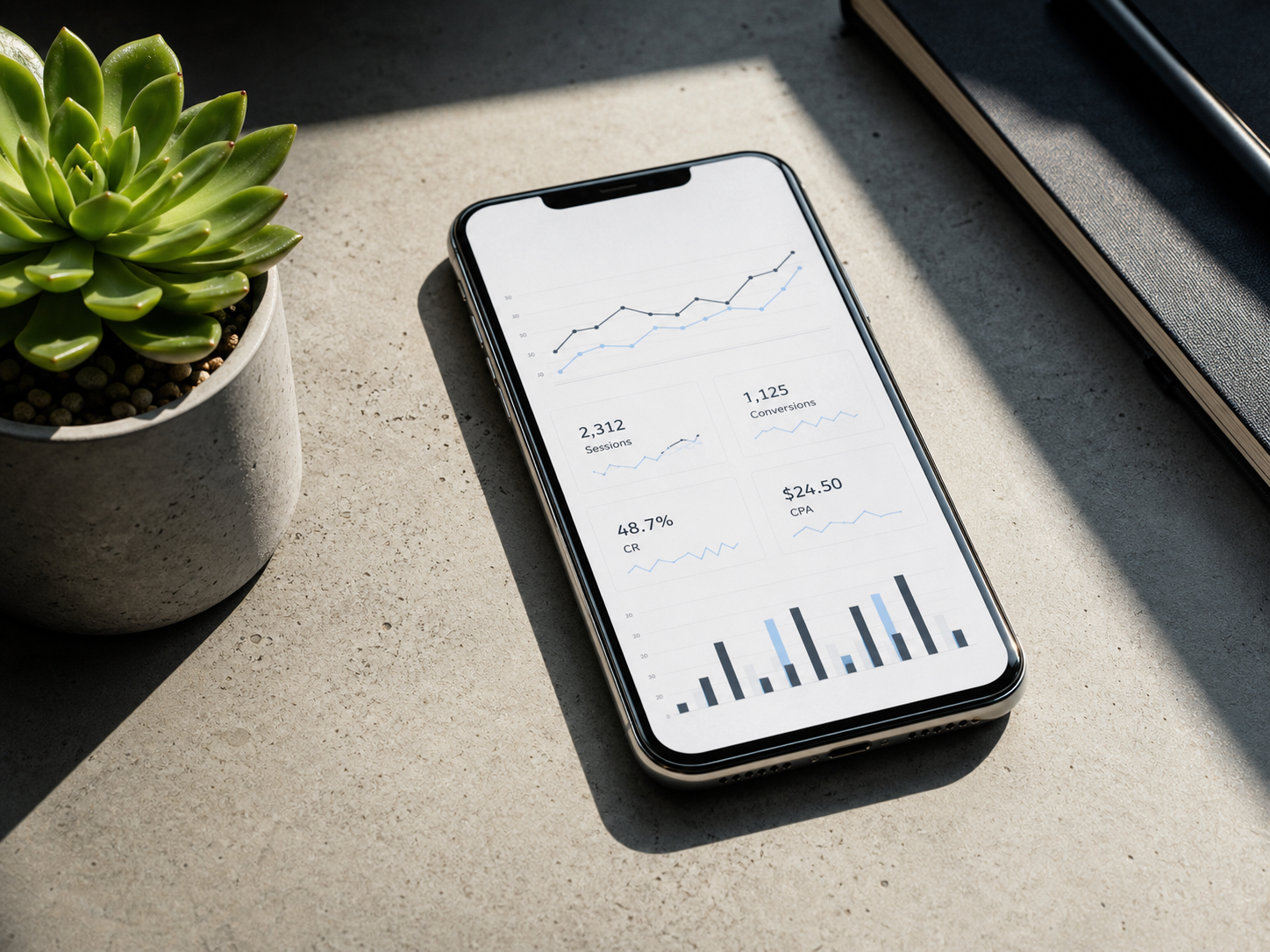
One of the fastest conversion rate optimization examples is rewriting the hero section to match the visitor’s source. If a Google Ads campaign targets “enterprise PPC audit,” the landing page should not open with generic agency copy. It should repeat the audit promise, name the audience, and state the outcome in the first screen.
Test idea: Replace “Grow faster with expert marketing” with “Find wasted PPC spend in 14 days with an enterprise Google Ads audit.” Track form submissions, qualified lead rate, and booked audit calls.
“When the ad and page tell different stories, the visitor pays the price in confusion and the brand pays it in wasted media.”
2. Shorter Forms With Sales-Useful Fields
Long forms can qualify leads, but they can also kill intent. The CRO question is not simply “short or long?” The question is which fields help sales and which fields create avoidable friction. A B2B demo form may need company email, role, company size, and one problem field. It probably does not need phone, budget, timeline, industry, country, and comments on the first touch.
Test idea: Reduce a nine-field form to five fields, then measure submission rate, sales acceptance rate, and show rate. If lead volume rises but sales acceptance drops, the test needs a second version with better qualification.
3. Proof Above the Fold
Many landing pages ask for trust before earning it. Proof elements such as client logos, short testimonials, third-party ratings, revenue outcomes, security badges, and recognizable integrations can reduce hesitation. The key is to place proof near the claim it supports, not buried near the footer.
Test idea: Add three proof points below the headline: one quantified result, one named customer quote, and one credibility marker. Track primary conversions and scroll depth.
4. Pricing Page CTA Split by Buyer Intent
Pricing pages often serve different buyers at once. Some visitors want to buy now. Others need a quote, a demo, or legal review. One CTA can underserve all of them. A strong CRO example is splitting CTAs by intent while keeping the main action dominant.
Test idea: Use “Start trial” as the main CTA, then add secondary CTAs for “Talk to sales” and “Compare plans.” Track trial starts, demo requests, and downstream paid conversion.
5. Mobile Speed Cleanup Before Creative Testing
Mobile pages that load slowly create a conversion ceiling. Before testing headlines, check Core Web Vitals, image weight, scripts, tag bloat, and render-blocking assets. A paid social landing page with a five-second mobile load time may lose high-intent visitors before they see the offer.
Test idea: Compress hero images, remove unused scripts, delay noncritical tags, and simplify above-the-fold code. Measure mobile conversion rate, bounce rate, and cost per lead by device.
6. Objection Handling Near the CTA
Visitors often hesitate because one unresolved question blocks action. Price, timing, implementation effort, contract length, security, integrations, and proof are common objections. CRO turns objections into page modules that answer the question before the visitor leaves.
Test idea: Add a short FAQ module near the primary CTA that answers setup time, who the service fits, cancellation terms, and expected first milestone. Track CTA clicks and form completion.
7. Offer Test for Higher-Intent Leads
Sometimes the page is fine but the offer is weak. “Contact us” asks too much and says too little. A stronger offer gives the visitor a reason to act now and tells them what they receive.
Test idea: Compare “Contact us” against “Get a 20-minute landing page teardown” or “Request a paid media waste audit.” Track lead quality, booked call rate, and opportunity creation.
8. Content CTA Matched to Search Intent
SEO content often wastes traffic with generic CTAs. A visitor reading a definition post is not always ready for a demo. A visitor reading a comparison page may be much closer. CRO improves content by matching the next step to intent.
Test idea: On educational articles, offer a checklist or benchmark worksheet. On bottom-funnel pages, offer a consultation or pricing review. Measure subscriber rate, assisted conversions, and demo clicks.
9. Checkout Trust and Cost Clarity
For ecommerce, hidden costs and late surprises damage checkout completion. Shipping fees, returns, delivery dates, taxes, payment options, and support access should be clear before the final step. CRO reduces the uncertainty that causes cart abandonment.
Test idea: Add delivery estimate, return summary, payment logos, and support link beside checkout CTAs. Track checkout completion rate and revenue per visitor.
10. SaaS Trial Activation Prompt
For SaaS, the first conversion is rarely the final goal. Trial users need to reach an activation event, such as importing data, creating a project, inviting a teammate, or completing setup. CRO can improve the path after signup as much as the signup page itself.
Test idea: Replace a generic welcome screen with a three-step activation checklist. Track activation rate, product-qualified leads, and paid conversion.
11. Segment-Specific Landing Pages
A single page may underperform when traffic contains multiple industries or buyer roles. Segment-specific pages let the team adjust examples, proof, objections, and language for each audience.
Test idea: Build separate pages for SaaS, ecommerce, and local service traffic. Keep the core offer consistent, but change proof points, metrics, and use cases. Track conversion rate and sales acceptance by segment.
12. Thank-You Page Routing
The thank-you page is an overlooked CRO asset. After a user converts, attention is high. Instead of a dead-end confirmation message, route users to the next best action: book a time, watch a short case study, answer qualification questions, download a guide, or invite a teammate.
Test idea: Replace “Thanks, we will be in touch” with a calendar booking module and a 90-second expectation-setting video. Track booked meeting rate and no-show rate.
CRO Example Scorecard
| Example | Primary Metric | Quality Check |
|---|---|---|
| Hero message match | Landing page conversion rate | Lead source quality |
| Shorter form | Form completion rate | Sales accepted lead rate |
| Proof above fold | CTA click rate | Opportunity rate |
| Mobile speed cleanup | Mobile conversion rate | Cost per qualified lead |
| Thank-you page routing | Booked meeting rate | Show rate |
How to Choose the Right CRO Example First
Do not start with the most interesting idea. Start with the highest-value leak. Rank opportunities by traffic volume, conversion gap, revenue potential, evidence strength, and speed to ship. A pricing page with high traffic and low CTA clicks usually beats a footer CTA test. A broken mobile form beats a testimonial layout debate.
Use a simple rule: fix defects, test uncertainty, document learning. If tracking is broken, repair it. If the form fails on one browser, fix it. If the team disagrees about the offer, test it with a clean hypothesis and a decision rule.
“CRO works when teams stop asking what they like and start asking where qualified demand is leaking.”
Q&A: Conversion Rate Optimization Examples
Which CRO example usually works fastest?
Message match and form friction fixes often move fastest because they are close to the conversion action. Speed fixes can also work quickly when mobile traffic is high and load time is poor.
Should every CRO change be A/B tested?
No. Clear defects should be fixed. A/B testing is best for uncertain choices where more than one reasonable option exists and traffic volume is high enough to produce a usable result.
What is the biggest CRO mistake?
The biggest mistake is optimizing for more conversions while ignoring lead quality or revenue. A winning test should improve the business, not just the dashboard.
How many CRO examples should a team test at once?
Most teams should run one major test per page or funnel step at a time. Running too many overlapping changes can make results hard to read. Larger sites can test more, but they need clean segmentation and strong analytics discipline.
Bottom Line
The strongest conversion rate optimization examples are practical, measurable, and tied to revenue. They improve message match, reduce friction, answer objections, sharpen offers, protect mobile performance, and route users toward the next useful action. If your traffic is growing but pipeline is flat, CRO gives the team a structured way to turn attention into commercial output.
Leave a Reply