Category: Uncategorized
-

Paying for a search term that your site already ranks for can look wasteful, but an organic position alone is not enough reason to lower a paid bid. The decision depends on whether the organic result reaches the right audience, appears prominently for the relevant query, and produces outcomes that paid search would otherwise have…
-

People often search by describing a problem or asking a complete question, rather than typing a short product term. AI-powered search experiences make that behavior more visible: a user may ask for a comparison, a recommendation, or a next step and receive a synthesized response. For performance marketers, those questions can reveal useful language and…
-

Negative keywords help paid-search campaigns avoid searches that are unlikely to produce a useful business outcome. For a performance marketing agency, the goal is not simply to block more queries. It is to identify where a search term conflicts with the offer, audience, buying stage, or service area, then exclude it without suppressing relevant demand.…
-
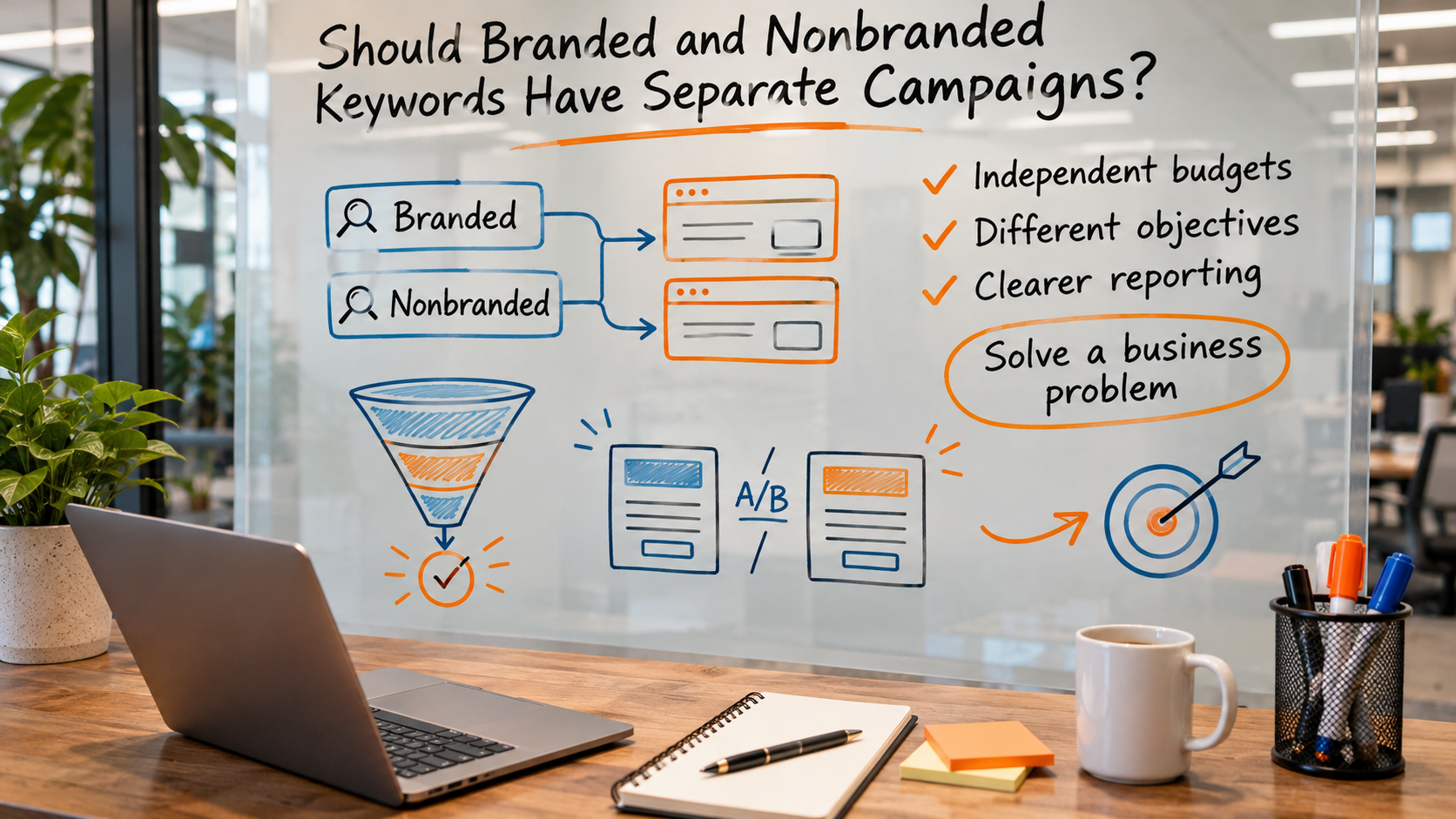
Should branded and nonbranded keywords have separate campaigns? Usually, yes—when you need independent budgets, different objectives, or clearer reporting. However, separation should solve a business problem. Google recommends organizing campaigns around objectives while keeping account structures simple. For a performance marketing agency, the practical decision is whether the extra control justifies the additional management. Campaign…
-

Using location targeting to improve B2B lead quality starts with a business question: where can your sales team realistically win and serve customers? Build the geographic strategy around that answer, then evaluate it through qualified opportunities and acquisition costs. For a performance marketing agency, the goal should be a defensible connection between advertising spend, serviceable…
-
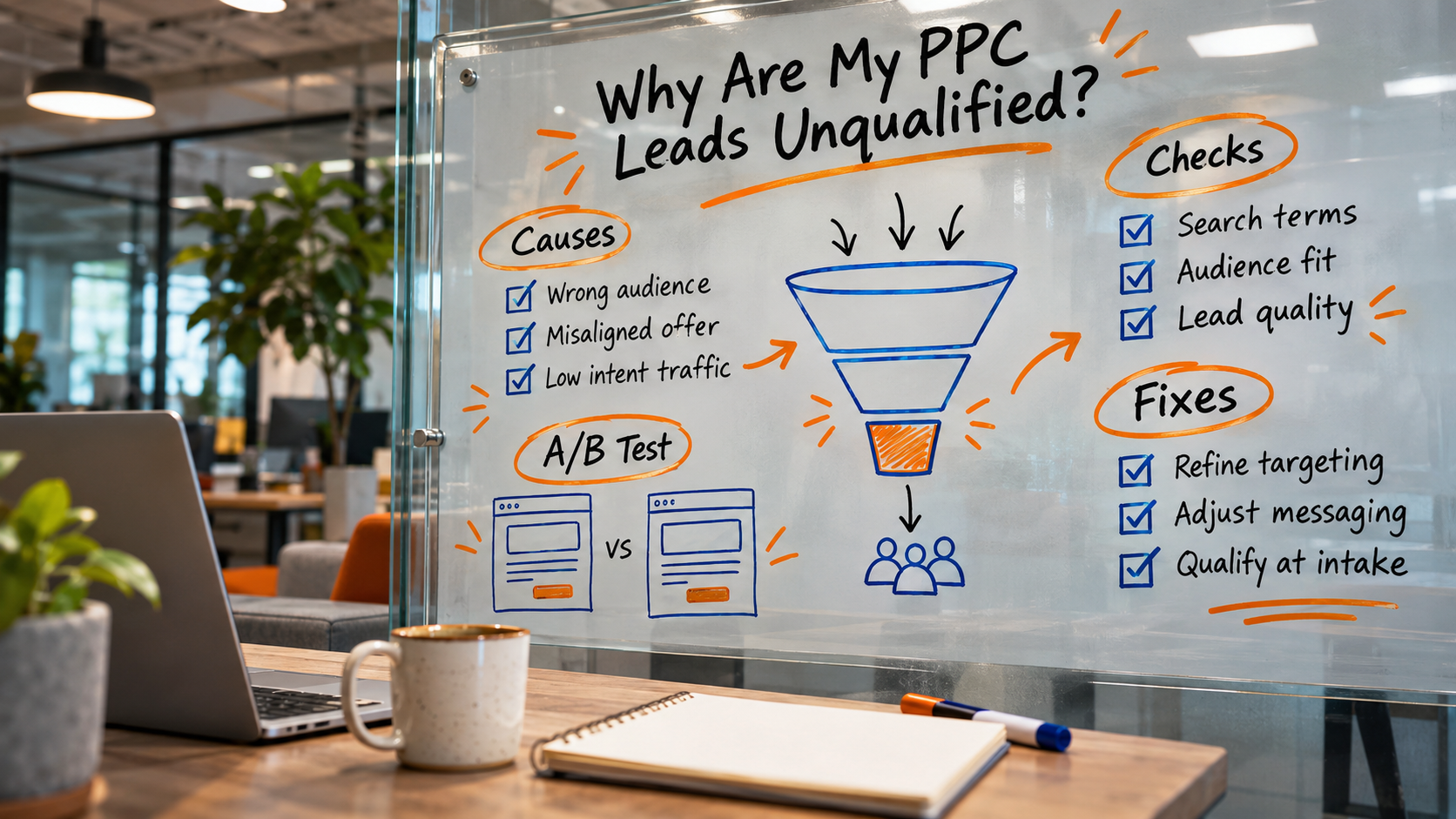
If you are asking, “why are my ppc leads unqualified,” the problem may not be the number of form submissions. It may be a mismatch between the people your campaigns attract and the people your sales team can serve. A paid campaign can generate plenty of conversions while producing few prospects with the right need,…
-

The first screen of a lead-generation landing page has a focused job: help the right visitor understand the offer, judge whether it is relevant, and find a clear next step. For campaigns driven by paid search, social ads, or organic content, that first impression should connect the promise that brought someone to the page with…
-

A useful UTM audit follows campaign information from the original marketing link through the landing page, analytics collection, and lead or purchase record. For a performance marketing agency, the objective is to establish which campaign labels can be trusted before using them to guide reporting and budget decisions. This guide explains how to audit UTM…
-
A well-built Performance Max campaign depends on more than a collection of headlines and images. Agencies need to organize assets around meaningful themes, meet Google Ads requirements, connect useful conversion signals, and establish a review process that catches problems after launch. This performance max asset group checklist for agencies is designed to make those tasks…
-
Negative keyword management is one of the most practical controls available to a performance marketing agency. When structured well, negative keywords help prevent ads from appearing for searches that are irrelevant, commercially unsuitable, outside a client’s service area, or assigned to the wrong campaign. When structured poorly, they can block qualified demand, create inconsistent account…